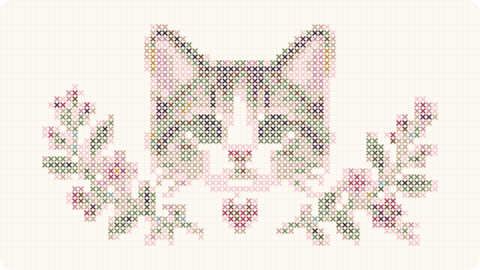
Turning a pet photo into cross stitch can create an extremely personal gift, but it is also one of the situations where automatic conversion becomes complicated quickly. Fur, shadows and household backgrounds generate many color changes while the features that actually make the animal recognizable can disappear.
The goal should not be preserving every hair. It should be keeping the eyes, silhouette, important markings and expression with an amount of detail that remains realistic to stitch.
Choose a photo where the pet’s personality is clear
Eyes are particularly important. A sharp photograph where both eyes are visible usually converts better than a beautiful image that is dark or taken from far away.
Ear shape, muzzle and coat markings help with recognition too. Try to avoid photos where those features are hidden behind blankets, hands or other objects.
A simple background reduces work dramatically. If the best photo contains a busy room behind the animal, crop the pet or replace the background with unstitched fabric.
Natural light makes fur color easier to understand. A warm indoor bulb can turn white fur into cream and orange during conversion.
The pose does not need to be formal. A characteristic position may feel more recognizable and personal than a perfectly front-facing portrait.
How much detail does a pet portrait actually need?
For a small pattern, prioritize large features: head outline, eyes, nose, ears and major markings. Individual hairs cannot be represented usefully with only a few crosses.
If you want more realism, increase grid size before dramatically increasing the palette. Giving a shape more space is often more useful than adding ten nearly identical colors inside a tiny area.
Long-haired animals can generate heavy confetti. Simplifying fur into broader light and shadow groups creates a cleaner chart while still suggesting texture.
For black or very dark pets, preserve some differences inside the shadows. One flat black may erase eyes and facial structure; a few dark grays or browns can restore volume.
White animals create the opposite issue. A few soft shadow shades keep the silhouette from disappearing on pale fabric, or you can choose beige or gray cloth for additional contrast.
How to reduce color count without losing identity
Start with distinctive markings. If the animal has a patch around one eye or a white section on the chest, those features should survive any simplification.
Merge similar fur colors when the differences come mainly from photographic noise. The viewer will see the whole animal rather than inspect every source pixel.
Keep more tonal information around eyes and muzzle, where small changes affect expression. You can simplify the body and background more aggressively.
A stylized version may actually be the stronger choice. Four or six carefully selected shades can produce a very recognizable graphic portrait that is much more enjoyable to stitch than a forty-color conversion.
Before finalizing the palette, look at the design as a small preview. If the pet remains recognizable from a distance, you probably have enough information.
From family photo to a chart someone actually wants to stitch
Calculate finished size and consider whether the person making it enjoys detailed projects. A personalized gift should not become a months-long obligation if that does not suit their stitching style.
Include a finished preview, clear key and, when possible, both color and symbol chart versions. Portraits using neighboring shades especially need strong readability.
If we develop this service, a preview before the pattern is finalized would make a lot of sense. Adjusting a marking, background or shade is much easier digitally than after printing or stitching has begun.
Do not be afraid to remove elements from the photograph. A leash, chair or object behind the head may make sense in the source image and add nothing to the stitched portrait.
A pet portrait succeeds when someone recognizes the animal before they need to compare it with the original photo. That identity usually comes from a handful of good design decisions rather than preserving the maximum possible number of colors.
That is where the real value of a custom pet portrait lies: not in clicking “convert,” but in editing the image thoughtfully until the result is personal, recognizable, clear and realistic to finish.
It is a product direction that could complement our ready-made pattern collection very naturally in the future: the customer brings a specific story, and we bring the simplification, palette decisions and a PDF designed to make that story genuinely stitchable.
With pets that have very uniform fur, expression usually depends more on the eyes, muzzle and silhouette than on adding ten nearly identical shades across the body. Concentrating most of the detail in those areas helps preserve the animal’s character while creating a cleaner chart that is much more pleasant to follow.