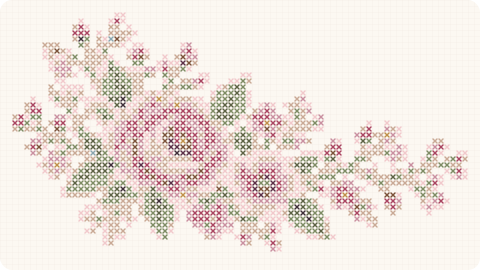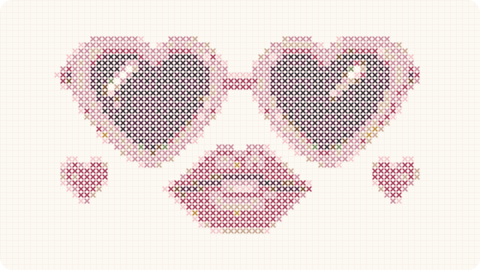
Cross stitch can look completely contemporary without stopping being cross stitch. The feeling of “traditional” usually comes more from subject, color, framing and composition than from the technique itself.
If you enjoy stitching but do not want your home to feel like classic needlework decor, you do not need to hide the fabric or change hobbies. Treat the finished piece as you would an illustration, print or other graphic object.
Choose designs that work as images, not only as needlework
Large clear motifs often feel more modern than compositions filled with many tiny elements. A face, oversized flower, everyday object or abstract shape can have significant presence.
Minimalist patterns use open fabric deliberately and avoid visual clutter. Geometric designs embrace the grid rather than trying to disguise it.
Pop art, retro graphics and pixel-inspired work also suit the medium naturally because they rely on flat color and strong shapes.
Quotes can work too, but the typography needs intention. One large well-composed word often looks more current than several lines of decorative text.
If the design could work as a poster even before someone realizes it is stitched, it probably has a strong contemporary visual foundation.
Color and fabric change the result dramatically
You are not required to use white Aida. Cream, gray, pale pink, blue and even black can transform the same chart.
Modern palettes may be bright or muted. Pink with red, green with lilac, mustard with blue or black with cream can move a motif away from more traditional combinations.
Graphic patterns are often easy to recolor because the shades do not need to model realistic light and shadow.
Fabric itself becomes a color when large areas remain visible. In a minimalist design, the background may occupy most of the composition.
Before changing shades, place actual skeins against the fabric. A palette that looks good on screen can behave differently in physical materials.
Framing can make the same stitching look completely different
A simple light-wood, black, white or thin metal frame often moves cross stitch closer to the visual language of a contemporary print.
Generous margins are particularly useful around small designs. The frame does not need to be filled with stitches; empty space can be part of the presentation.
A neutral mat can separate the textile from the frame and make the finished piece feel more graphic.
A hoop can still look modern when the design and surrounding space support it, but it communicates craft more directly. Decide which feeling you want rather than using a hoop automatically.
Avoid choosing a heavily ornamental frame simply because the technique is old. The finish does not need to belong to the same historical period as the stitching method.
Mix cross stitch with other kinds of art
You do not need a wall made entirely from embroidery. Mixing stitched work with photography, illustration, ceramics or prints can make it feel far more naturally integrated.
Repeat colors across different media. A red from the stitching can appear in a nearby print and create a relationship even when the subjects have nothing in common.
Vary scale. A small stitched piece beside a large print prevents every object from competing at the same visual level.
Cross stitch can also appear in less expected places: a contemporary kitchen, office, hallway or shelf beside books and objects.
Modern does not mean removing every handmade quality. The texture of thread and fabric is exactly what can make the piece interesting inside a very clean space.
The key is to stop assuming cross stitch requires one particular decorating style. It is a visual medium like any other. When subject, color, scale and frame are chosen with the same intention you would use for an illustration, the result can feel completely current while keeping its handmade character.
That is one of the central directions for our patterns: treating cross stitch as graphic design and home decor rather than a technique that has to look old-fashioned by definition. Subject, color, scale and finishing should let you choose a piece because it suits you and your home, not simply because it is made with thread.
It also helps to think about the piece the way you would think about a print or photograph. Does it need generous space around it? Does it work better alone or with other art? Do its colors connect with textiles, furniture or the wall? Asking those questions before stitching helps you choose patterns you will genuinely want to live with rather than simply finish and store.