
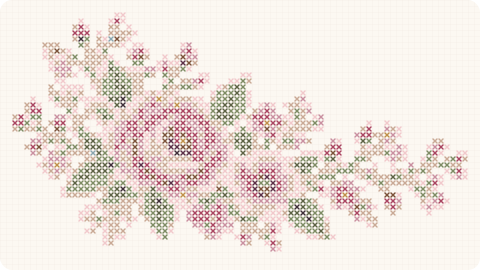
Full coverage means that almost the entire design area is filled with stitches. It is common in portraits, art reproductions, landscapes and photo conversions. The result can be impressive, but it changes project scale completely: more stitches, more floss, more color changes and less visible fabric as a reference.
It is not automatically an “advanced” technique. The challenge comes mainly from duration and organization.
What makes a full-coverage pattern different?
In an open-background design, many chart squares remain unstitched. In full coverage, nearly every block contains work.
A 200 × 200 grid can therefore approach 40,000 actual stitches rather than using only a fraction of those positions.
The background is no longer the fabric; it becomes part of the stitched image and consumes floss.
Chart pages are usually denser and benefit from a clear progress system.
How to organize a long project
Divide the chart into blocks, pages or weekly targets.
You do not need to think constantly about the total stitch count. One small working area keeps the project manageable.
Mark everything completed so symbols are not accidentally repeated.
Store thread and needles using a stable system because the same colors may stay active for months.
Color-by-color or parking method?
In large blocky areas, completing one color can be very efficient.
In sections with heavy confetti, parking reduces repeated starts and finishes.
You can combine both approaches depending on the area.
There is no mandatory full-coverage technique; the best system is the one that lets you return to the project without reconstructing where you stopped.
Fabric, frames and physical comfort
Calculate finished size carefully before cutting. With so much of the grid in use, changing fabric count alters the physical dimensions significantly.
A Q-Snap, scroll frame or stand can be comfortable because less weight is held in your hands.
Control excess fabric so it does not drag on the floor or collect dirt.
Take breaks. A large project is not worth physical discomfort from trying to complete too much in one session.
How to maintain motivation for months
Take progress photos. Changes that feel tiny day to day become obvious when you compare several weeks.
Alternate with small projects when you need the satisfaction of finishing something.
Avoid impossible daily quotas. Regular modest sessions usually work better than occasional marathons.
Choose an image you genuinely love because you will spend a long time with it.
Full coverage is mainly a commitment of time. When the chart is well designed and your organization works, each individual stitch is no harder than it would be in a small pattern. There are simply far more of them, making planning more important than technical skill.
Before buying this type of chart, look at a sample and the color count. Two patterns with identical dimensions can feel completely different when one uses broad blocks and the other contains hundreds of scattered color changes.
In full coverage, color count alone does not tell the whole story. Twenty shades grouped into broad areas may be easier than twelve scattered as confetti across every page. That is why a genuine chart sample reveals much more than one isolated number.
If we offer patterns in this category, the product page needs to be especially transparent: stitch dimensions, full-coverage status, color count, techniques, page count, recommended fabric count and a floss estimate when one or more shades dominate the design.
We also want to avoid automatic conversions that retain nearly identical colors without adding visible improvement. On a project containing tens of thousands of crosses, removing one unnecessary shade can eliminate hundreds of changes while preserving the artwork.
The PDF has to support long-term navigation: highly distinct symbols, ten-square lines, clear page numbering and understandable continuation areas. When you may live with a file for months, layout is no longer a minor detail.
Full coverage can justify a premium product precisely because it requires more design and file review. The value is not making a chart enormous; it is making a complex piece remain logical, readable and reasonably organized.
Before choosing one of our future full-coverage designs, you should be able to understand the real commitment without guessing. The final image may attract you, but the specifications are what let you decide whether this is the project you actually want to begin now.
It also helps to break progress into visible milestones —one page, band or recognizable area— rather than thinking only about total completion percentage. On a project lasting many months, those smaller targets make progress feel much more tangible and easier to sustain.