Turning cross stitch into a cushion lets the work live somewhere other than a wall and gives a practical use to square, geometric, floral or text-based designs. The stitching can cover the entire front or become one central panel combined with another fabric.
The important part is planning the finish before you begin so enough seam allowance remains and the stitches do not end up too close to the edge.
Design around the final cushion size
First decide whether you want something around 12, 16 or 18 inches, for example.
Calculate the physical size of the stitching and see how much open space remains around it.
A smaller stitched panel can be centered inside a larger fabric front.
The whole cushion face does not need to be Aida.
Leave enough fabric for sewing
Framing margin and seam allowance are not exactly the same thing.
You need clean fabric around the stitching so pieces can be joined without sewing through the crosses.
Mark an approximate seam line before trimming.
If the Aida frays easily, secure the edges before construction.
Combining Aida with another fabric
A practical approach is using the stitching as a panel and adding cotton, linen or decorative fabric around it.
This lets you adjust final size without designing an enormous grid.
It also reduces the amount of visible Aida and can make the finish feel more like a home textile.
Press seams carefully so the central panel remains flat.
Choosing a backing
An envelope closure is simple and allows the cushion insert to be removed.
A zipper creates a cleaner closure but requires slightly more sewing skill.
For decorative cushions that are washed infrequently, either method works.
If regular washing is important, choose fabrics and floss that tolerate the same care routine.
Protection and everyday use
A stitched cushion should not sit in a very high-friction area when the design includes beads or delicate embellishments.
Ordinary cotton crosses can handle a surprising amount of use when properly secured.
Avoid bulky knots on the reverse because they may be felt through the cushion.
A thin lining behind the stitched panel can protect thread ends and the back of the work.
Patterns that work particularly well
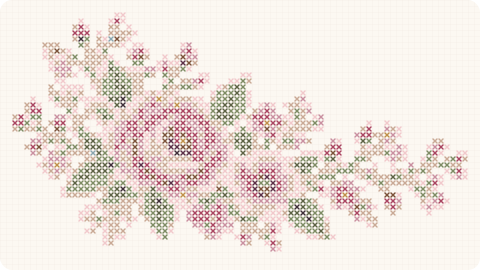
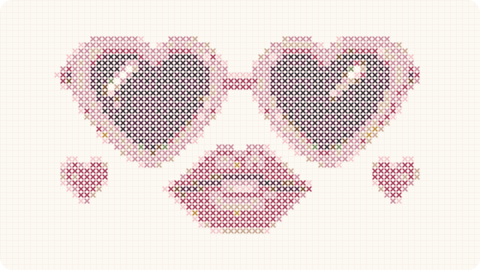
Geometry, large florals, stylized animals and pop designs fill a square surface nicely.
A short phrase can work when the lettering is large enough.
Avoid tiny details that disappear when the cushion is viewed from across the room.
Think about palette and existing decor as you would with any other home textile.
A cross stitch cushion combines embroidery and sewing, but it does not need to be complicated. If you leave margin from the beginning and treat the stitching as a panel, almost any medium design can become a useful object without covering the whole surface in crosses.
Before cutting the stitched fabric, make a paper template of the final cushion. Placing the embroidery over that shape makes it much easier to decide whether it needs a wider border, contrasting fabric or a different finished size.
For cushion patterns, stitch count needs to be translated into textile dimensions before the first cross. A 140-stitch square measures 10 inches on 14-count fabric but about 7.8 inches on 18-count. If the finished cushion is meant to be 16 inches, that changes the width of the surrounding fabric panel dramatically. A good PDF should show the calculation for the recommended count and make clear how much unstitched border is expected.
Seam allowance must then be added outside the design area, not taken from it. When a pattern is created specifically for a cushion, we can provide a suggested cutting diagram or panel dimensions so the user knows where the embroidery sits in the finished front. That is more useful than a lifestyle mockup alone because it connects the chart directly to construction.
Care requirements should be decided before combining fabrics. Cotton floss may tolerate washing well, but decorative fabrics, linings, zippers and inserts can have different needs. Prewashing compatible fabrics can reduce unexpected shrinkage, while delicate embellishments may make a cushion better suited to decorative use. The pattern should flag those choices when the recommended finish includes materials beyond ordinary Aida and floss.
For a coordinated cushion collection, scale and palette can remain constant while the central motif changes. A pair of stylized animals, two geometric designs or a seasonal series can share the same panel size and backing construction. This makes repeat purchases more practical because the stitcher can reuse the cutting measurements and sewing method instead of learning a new finish for every design.
Our cushion PDFs should distinguish embroidery difficulty from sewing difficulty. A simple full-cross motif may be beginner-friendly to stitch while a zippered cover requires more construction experience. Stating both parts honestly helps someone choose the right project and lets us offer alternative finishes, such as an envelope back, without pretending every customer has the same sewing setup.