Cottagecore cross stitch combines nature, domestic life and a deliberately quiet visual mood: wildflowers, mushrooms, cups, houses, fruit, baskets, books and small animals. The main risk is overcrowding the design, which makes selection more important than quantity.
It can feel nostalgic without looking old-fashioned when composition remains clean and the palette is controlled.
Motifs that fit cottagecore particularly well
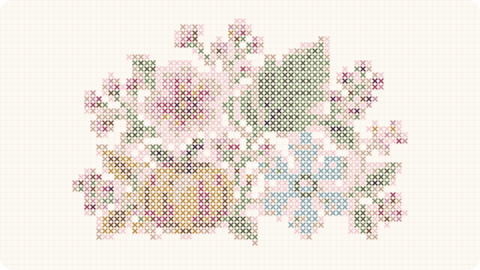
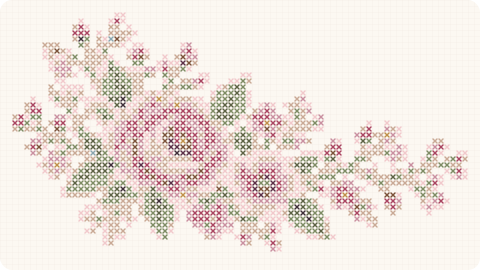
Flowers and plants are the obvious foundation, but they do not need to become a traditional bouquet. One branch, potted plant or handful of small blooms can be enough.
Mushrooms, strawberries, cherries, bread, cups and kitchen objects add domestic warmth.
Cottages, windows and doors can work as the main motif.
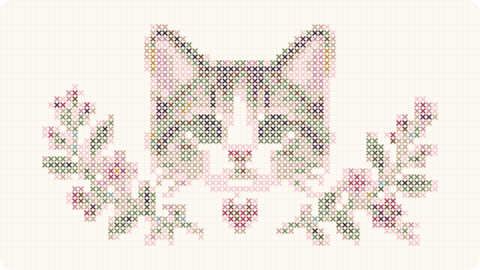
Small animals —rabbits, birds, cats— support the style well when they do not overwhelm the scene.
Palettes that create coherence
Sage green, cream, terracotta, muted red, mustard and brown are common because they suggest natural materials.
You do not need every one of those shades. A five- or six-color palette can feel much more elegant.
Beige, cream or natural-linen-colored fabric helps the background become part of the composition.
For a more current twist, introduce one bright pink, lilac or blue accent.
How to keep cottagecore from looking too traditional
Use more negative space. There is no need to fill corners with borders and decorative mini motifs.
Enlarge one subject. A large mushroom or floral cup can feel more modern than twenty tiny objects.
Use simple lettering when text appears.
A clean light-wood or black frame can completely change the finished mood.
Small projects and coordinated collections
Cottagecore works very well as a series of mini patterns because each piece can represent one separate object.
A set of four small frames might combine mushroom, flower, cup and bird while sharing one palette.
You can also build a modern sampler where elements are separated by open space rather than rigid borders.
For gifts, choose a motif connected to the recipient: a favorite flower, meaningful house or everyday object.
What to check before choosing a pattern
Look at how many elements appear and how much of the background is actually stitched.
Check whether leaves, stems and fine outlines depend heavily on backstitch.
If you want a relaxing experience, avoid charts with many nearly identical shades and constant confetti.
When building a collection, try to keep proportions and palettes compatible.
Cottagecore suits cross stitch because both value handmade detail, but you do not need to imitate antique needlework. Fewer elements, open space and a deliberate palette can make the result feel warm and contemporary at the same time.
One easy way to update the style is to treat every pattern like a small editorial illustration. Instead of decorating every edge, decide which object deserves to lead and allow visible fabric to do part of the visual work.
Cottagecore can become very traditional when every edge is filled with flowers, borders and muted detail. To keep it current, we prefer one clear subject with visible space around it: a teapot, basket, window or plant may be enough.
Palette can modernize the aesthetic too. Olive green, terracotta, cream and one unexpected accent fit our direction better than trying to reproduce every natural variation in a countryside scene.
A cottagecore collection can be organized around small rituals: cooking, gardening, reading, mushroom gathering or caring for flowers. That gives the catalog more personality than a sequence of unrelated rustic motifs.
On the product page, we want coverage and color count to be clear. A soft-looking scene can hide a huge amount of confetti when leaves and flowers are rendered too realistically. If the goal is a relaxing project, the design needs to be genuinely simplified.
We also want this category to connect naturally with botanical, mushroom and food collections. That lets us recommend related patterns inside our own shop and build useful paths between collections without sending readers elsewhere for inspiration.
Seasonal variation also makes sense without turning the category into something purely seasonal. Flowers and strawberries may suit spring, mushrooms and leaves autumn, but a shared palette and composition can keep the cottagecore identity consistent throughout the year.
For an original collection, that gives us room for periodic releases while still linking new work to earlier patterns. Someone arriving through a mushroom, botanical or food guide can discover related projects here without leaving our site.
Finishing can reinforce the category too. Simple wood frames, pale backgrounds and smaller formats keep the handmade warmth without making the finished piece feel old-fashioned or overly decorated.
That also gives us room for small seasonal releases without changing the underlying identity of the collection, so customers can add new pieces over time instead of treating each launch as an unrelated theme.