
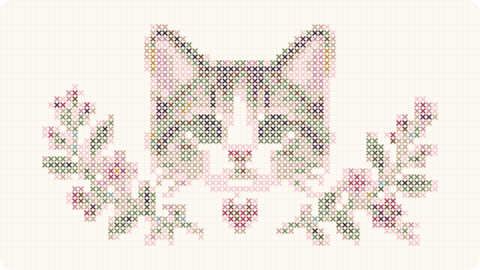
Cats translate especially well into cross stitch because their silhouette remains recognizable even after heavy simplification. Two triangular ears, a curved tail and a familiar pose can say “cat” with surprisingly few stitches. That makes the subject suitable both for someone who wants a small weekend finish and for a stitcher looking for a portrait full of subtle shading.
The useful decision is not simply choosing the prettiest listing image. “Cat pattern” can mean a six-color icon, a pop-art composition, a minimalist silhouette or a portrait containing thousands of stitches and dozens of shades. Before buying, decide what kind of stitching experience you actually want, because two equally attractive designs can feel completely different in the hoop.
Simple cat patterns for an easy first project
If you are new to cross stitch, look for silhouettes, stylized faces and clear color blocks. A sitting profile, a large-eyed face or a sleeping cat can be built from relatively few colors and areas that are easy to follow. The clearer the outline, the less you depend on tiny shadow changes to understand where you are in the chart.
Small cat patterns are also a good place to play with color. A stitched cat does not have to be black, white or orange. In a graphic design, pink, blue, green, lilac or a bold pop palette can still read immediately as a cat. That freedom is useful when you want the finished piece to suit a particular room rather than reproduce realistic fur.
Look at the background too. A motif surrounded by unstitched fabric is usually much faster than a fully covered square. If you want a calm project you can finish in a few days, the amount of negative space in the preview tells you more than a generic “easy” label.
Your first cat does not need complicated whiskers or many special stitches either. Backstitch can add beautiful detail, but a design built mostly from full crosses lets you concentrate on counting, keeping your top stitches consistent and finding a comfortable rhythm.
When a more detailed cat portrait is worth the extra work
If you want the finished piece to resemble a particular cat, the pattern needs more visual information. Detailed portraits use several shades to build eyes, muzzle, fur, shadows and coat markings. That increases the number of thread changes and usually the overall time, but it also makes much more personal features possible.
Before buying, check both the color count and the stitch dimensions. A very small portrait with a huge palette can create intense confetti: isolated crosses that force you to change thread constantly. Sometimes a slightly larger design is actually more pleasant because the shading has room to form larger, clearer groups.
Consider whether the background is stitched as well. A cat on open fabric can dramatically reduce the workload while keeping all attention on the face or pose. A fully stitched background may look impressive, but it can turn a manageable portrait into a large full-coverage project.
If the chart comes from a custom photograph, the source image matters enormously. Natural light, sharp focus and enough contrast between the cat and its surroundings help the important markings survive simplification. A beautiful but very dark photograph can produce more colors without necessarily creating a better portrait.
Cat styles that work in a modern home
Geometric, minimalist and pop-art cats are particularly easy to integrate into contemporary decor. A two-color silhouette can sit in a small frame on a shelf, while a portrait in pink, red and cream can become the strongest piece on a gallery wall.
Retro interpretations work well too. A cat surrounded by stars, simple flowers or mid-century-inspired shapes can feel decorative without becoming childish. With a controlled palette, even a playful motif can look polished once it is framed.
If you want to build a collection, repeat the same scale and change the pose: one cat sitting, another stretching and another sleeping. Keeping two or three colors in common makes the pieces feel related even when the drawings differ. It is also a good way to create a larger display gradually instead of committing to one enormous project.
You can represent several real family cats with a simplified visual language as well. A design does not need photographic realism to feel personal. The right silhouette, familiar patches, eye color or an unmistakable pose may be enough for someone to recognize the animal immediately.
What to check before buying a cat cross stitch pattern
Beyond the finished image, a cat pattern should make the workload easy to understand. Check stitch dimensions, color count, whether the background is stitched and whether techniques such as backstitch are used for whiskers or eye details.
With fur and shading, chart readability matters particularly. A clean key and clearly different symbols prevent neighboring browns and grays from becoming a small battle over hundreds of stitches.
Think about where the piece will live too. A small cat can work beautifully as a gift or shelf frame; a large portrait asks for more time and a more permanent place. Choosing scale with the destination in mind gives the project a purpose from the beginning.
That is the kind of information we want to show when cat designs become part of our collection: not only an attractive finished image, but the practical details that tell you whether the project fits the time and level of detail you actually want.
If you love cats but do not want to begin with a huge portrait, a silhouette or limited-color graphic design is often a much more enjoyable entry point. You can enjoy the subject from your first project and save realism for the moment when you genuinely want that extra detail.