
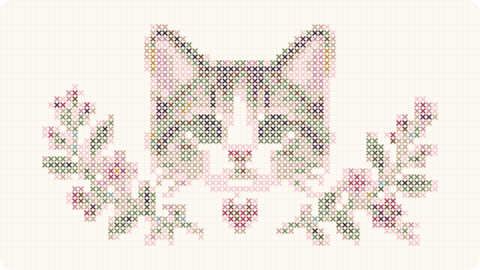
Cows, sheep, chickens, pigs and goats have recognizable silhouettes and features that work well in cross stitch. They can be treated in a modern style without turning every animal into a childlike character.
Choose between kitchen mini, portrait and rural scene
A kitchen mini and a realistic farm-animal portrait should not be built from the same grid logic. Decide whether the product is a quick decorative icon, a coordinated set or a portrait of a specific animal before choosing the amount of marking, wool or feather detail.
Keep the identifying features of each animal
Small patterns should prioritize head, markings and outline. On a cow, spot distribution can add identity; on a sheep, the wool mass needs enough contrast to avoid becoming one white block.
Use modern farm palettes without losing species identity
A farm composition can mix several animals, but scale needs control so none appears accidentally enormous. A shared ground line or framing system helps maintain visual proportion.
Plan coordinated sets and real-animal customization
Cream, green, terracotta and black can create a contemporary rural palette; pop colors can move the same theme toward kitchens, children’s rooms or more graphic decor.
Use breed names only when the design supports them
For personalized gifts based on a real farm, original photographs can help match markings, colors or breeds. Business labels and logos are not necessary for the place to feel recognizable.
Build beginner minis and detailed portraits separately
A collection can separate kitchen minis, animal portraits and rural scenes. That variety creates different difficulty and price levels without repeating the same chicken with minor changes.
Farm-animal patterns can range from playful kitchen minis to realistic portraits, and the intended style should be decided before charting. A cow, sheep or chicken can be recognized with very few well-chosen shapes, while realistic breeds require more specific markings and body proportions. Mixing cartoon heads with photographic bodies in one collection creates an inconsistent visual language.
Small designs benefit from bold identifiers: horns, wool shape, comb, beak, patches or ear position. Keep these features even when simplifying the rest of the body. A mini Highland cow may need its fringe more than detailed shading; a hen may need a clear comb and tail silhouette more than dozens of feather colors.
Farm themes connect naturally with kitchen and rustic decor, but they do not need to look traditionally country. Clean geometric cows, pop-color chickens or minimalist sheep can create a contemporary collection. Fabric color, typography and frame choice can push the same subject toward modern or vintage without changing the animal itself.
Personalization can use farm names, family names or a short original phrase, but should remain visually secondary. If the design is based on a customer’s own animal, treat it as a portrait service: preserve markings and characteristic features and provide a preview before generating the final chart.
Collections can be sold as coordinated sets because the animals share context. Matching frame sizes for cow, sheep, pig and chicken create obvious repeat purchase, while individual pieces still work alone. One consistent palette can make a group feel intentional even when coat colors differ.
MAKE farm-animal PDFs should give exact dimensions and intended style. A customer choosing a quick kitchen mini should not discover a dense portrait chart after purchase. Clear scale, color count and finishing suggestions make the category useful both for beginners and for more detailed decorative work.
Breed-specific designs should only use breed names when the visible features support them. Horn shape, coat pattern, ear form and body type can matter. If the illustration is intentionally generic or stylized, a broad label such as “dairy cow” or “fluffy sheep” may be more accurate than claiming a precise breed.
Kitchen sets benefit from consistent physical sizing. A cow, hen and sheep stitched into equal hoops or tiles can share borders and typography even when their silhouettes differ. Planning the collection as a set from the start produces better spacing than resizing finished standalone charts afterward.
Children’s or nursery versions can simplify shapes further, but avoid turning every animal into the same round face with different ears. Distinctive silhouettes keep the series charming while still teaching the viewer which animal is which.
Simple farm-animal charts are ideal candidates for beginner sets because large color blocks and clear silhouettes reduce counting complexity. The product should still state whether backstitch, fractional stitches or French knots appear so “easy” has a concrete meaning.
For patterned coats, keep the large identifying patches even in beginner versions. Simplification should reduce tiny edges and spots, not erase the markings that make one cow or sheep distinct from another.
MAKE should state clearly whether a design uses full crosses only or adds backstitch, fractions or knots, especially in beginner products. The PDF should include cut-size guidance, count, physical dimensions, color key and a finishing suggestion appropriate to the intended kitchen, hoop or framed format.