
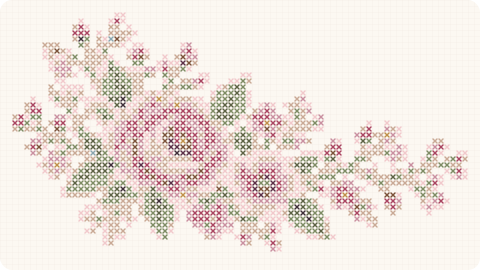
Spring is a broad cross stitch theme because it combines flowers, new leaves, rain, birds, insects, early fruit and brighter color. Unlike one specific holiday, spring patterns can remain relevant for several months and work as decor, gifts or personal projects.
The challenge is avoiding a collection where everything becomes the same floral bouquet.
Spring motifs beyond flowers
Umbrellas, clouds, rain boots and drops can create highly graphic scenes.
Birds, butterflies, bees and small insects add movement.
Strawberries, early cherries and new leaves suggest the season without feeling obvious.
Open windows, bicycles and outdoor objects can create a more urban spring mood.
Using flowers without repeating the same style
Enlarge one flower instead of building a full bouquet.
Use abstract or geometric blossoms.
Combine very simple stems with an unexpected palette.
Flowers can also become a border around lettering or one central object.
Modern spring palettes
Soft pastels work, but they are not the only option.
Tomato red, vivid green, sky blue and yellow create something much more graphic.
A cream or gray base reduces sweetness.
Two saturated colors and one neutral may be enough for a very modern pattern.
Small projects for seasonal decorating
Mini hoops can refresh a shelf without replacing major wall art.
A set of four flowers or insects can hang together.
Cards and ornaments work naturally for seasonal gifts.
A small cushion can bring the palette into a room in a more functional way.
Beginner-friendly spring patterns
Spring offers many subjects with simple silhouettes.
A tulip, bee or strawberry can be stitched with very few colors.
Open backgrounds reduce the total stitch count.
Avoid dense garden scenes when you want a quick project.
Building a coherent collection
Choose one shared palette and vary the motifs.
Keep scale and framing consistent.
Think of the collection as a series of illustrations rather than one chart divided into pieces.
Leave room to introduce summer later if you want to extend the line.
Spring patterns work best when they capture a feeling of change and light rather than simply accumulating flowers. Rain, insects, fruit and everyday objects can broaden the theme and produce far more varied contemporary designs.
For SEO and catalog planning, keep general floral content distinct from explicitly seasonal pages. That allows strong internal linking without forcing two pages to compete for exactly the same search intent.
A spring collection can be broader than flowers. Rain boots, umbrellas, birds, seedlings, fresh leaves, windows, bicycles and light geometric shapes all communicate the season without turning every design into another bouquet. Using different subjects gives the catalogue more range and reduces the risk of several articles or products competing around identical floral intent.
Color is one of the easiest ways to create a spring mood, but pastel does not have to mean low contrast. Soft pink, green, yellow and blue can still be arranged with enough value difference for the motif to remain readable. A pattern should be tested on the recommended fabric because pale thread can disappear quickly on cream or light-colored backgrounds.
Spring is also a useful point for designing small home updates. Mini hoops, narrow framed pieces, bookmarks, cards and ornaments can refresh a room without becoming large long-term projects. Our pattern PDFs should give exact finished dimensions and suggested display formats so the customer can decide whether a motif belongs on a shelf, gallery wall or gift before purchasing supplies.
Collections can be structured around one visual system: the same frame size with four different spring subjects, one border used across several floral motifs, or a shared palette that moves from rain to flowers to birds. This creates a stronger product family than simply releasing unrelated seasonal charts under the same label.
Personalization is useful for spring gifts such as birthdays, Mother’s Day or new-home presents, but the seasonal design should still stand on its own. Initials, a date or a short original phrase can be integrated carefully. Any custom file should update the chart, key and preview consistently rather than only changing visible text on one page.
For SEO and catalogue planning, general flower content should remain separate from explicitly spring-focused content. A flower-pattern article can answer evergreen queries about botanical motifs, while this page can focus on seasonal colors, weather, project timing and spring-specific collections. Linking between them is useful; merging the intent is not.
For a spring pack, it is useful to mix one very quick motif with one medium project and one more decorative piece. That gives customers different time commitments inside the same visual family and makes the collection useful both for last-minute gifts and slower seasonal stitching.