Modern cross stitch does not need to hide the fact that it is made from crosses. In fact, much of its decorative appeal comes from the tension between a slow, traditional technique and an image that feels graphic, minimal or unmistakably current. The shift is less about inventing a new technique and more about choosing the design, palette, scale and presentation with intention.
If you want cross stitch to work in a contemporary home, think of the finished piece as small-scale graphic art. You do not need a wall full of traditional motifs to make stitching visible. One piece with strong proportions and a thoughtful palette can sit comfortably beside prints, photographs and other artwork.
What makes a cross stitch design feel modern
Simple shapes help. Silhouettes, abstract compositions, oversized typography, geometric blocks and stylized portraits work particularly well because the grid supports the visual language rather than fighting it.
Palette changes the mood just as dramatically. Instead of using dozens of shades to imitate a photograph, a modern design might use four, six or eight deliberately contrasting colors. Earth tones, red and pink combinations, muted greens, cobalt blue or almost fluorescent accents can make a piece feel closer to editorial illustration than conventional needlework.
Negative space is another powerful tool. You do not have to cover every inch of fabric. Leaving broad areas unstitched gives the composition room to breathe and allows the cloth itself to become part of the design. As a practical bonus, it often reduces stitching time and floss use.
Scale matters too. Tiny motifs can be charming, but one large, simple shape may have much more visual presence. Sometimes a 70 × 90 stitch design using five colors feels more contemporary than a far more intricate chart.
Ideas that work particularly well in contemporary interiors
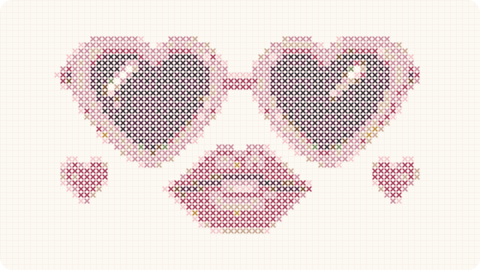
Graphic portraits are an obvious starting point. Profiles, lips, glasses, hands or figures built from a few flat color areas work beautifully in simple frames. If the design leans toward pop art, one strong accent color can connect it to a cushion, lamp or nearby artwork.
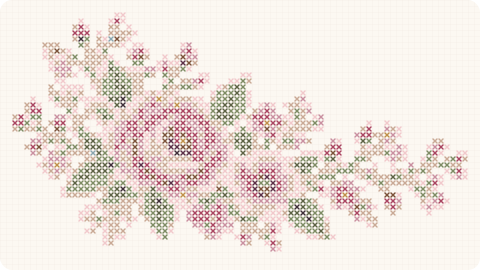
Botanical subjects can feel modern when they are simplified. Rather than a highly detailed floral scene, think of one oversized leaf, three differently shaped flowers or a vase arranged almost like a flat illustration. Animals work in the same way: a silhouette, strongly stylized head or geometric interpretation can feel current without losing character.
Food and drink are another playful category. A can, cocktail glass, cherry, coffee cup or plate of pasta can become a compact piece with humor. In contemporary kitchens, this kind of stitching works precisely because it does not take itself too seriously.
Words can be equally strong. A short phrase, one oversized word or a meaningful date in a clean typeface can have more impact than a long quote. Treat the lettering as part of the composition rather than text added after the fact.
How to frame modern cross stitch without losing the effect
Framing changes how a stitched piece is perceived. Light wood, black, white or a solid-color frame often works well with modern patterns. There is no need to use something that looks specifically like a “craft frame.” A standard print frame can help cross stitch sit naturally alongside photographs and illustrations.
Give the piece some breathing room. A small border of visible fabric usually looks better than cropping the design right to its outermost stitches. If you use a mat, make sure it does not crowd the embroidery or flatten the visual texture.
You can keep a piece in a hoop if the look suits your space, but consider varying the presentation across a gallery wall. One hoop beside two rectangular frames and a paper print can feel much more natural than making every object use the exact same format.
How to build a collection without making it feel random
If you want several stitched pieces, choose a connecting thread. It might be palette, style or subject. Three completely different images can sit together if they share two or three colors. Likewise, three different palettes can work if every pattern has the same graphic language.
You do not have to buy or make the whole collection at once. Start with one piece you genuinely love and use the finished result to choose the next. What color is missing from the wall? Do you need something smaller? Do you want to repeat the style or introduce a little contrast?
Growing a collection gradually has another advantage: every project has a destination. Knowing where you plan to place a piece can influence the stitch count, fabric and frame before you begin. The final group usually feels more intentional than accumulating completed projects with no idea where they will live.
Modern cross stitch works best when it does not pretend to be something else. The grid, texture and handwork are still visible, but they are combined with a design language that belongs naturally in the rest of your home. That mixture is exactly what can make a relatively simple stitched piece so striking.
If you want the finished piece to become part of your home rather than end up in a drawer, choose the pattern with its eventual space in mind. That is one of the ideas behind our collection: designs you want to stitch, but also want to display once they are finished.