
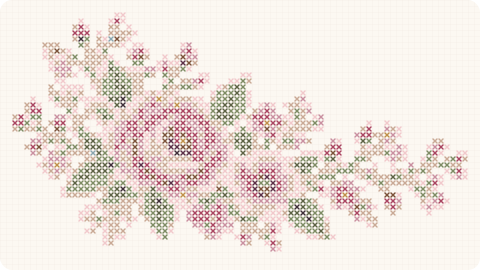
Floral wreaths are one of the most flexible structures in cross stitch because they solve two design problems at once: they create a clear frame and leave a central area for personalization. The same basic format can hold a name, initial, wedding date, birth details or a short word. Changing the flowers, palette and density can make the wreath feel romantic, modern, rustic or minimal.
The most common mistake is trying to fill the entire circle with too many species, colors and details. A strong wreath does not need to look like a complete bouquet viewed from above. It usually works better when detailed areas alternate with quieter space so the center remains readable.
A full circle is not always the best wreath shape
A classic circular wreath works beautifully around an initial or short name. A half wreath or open arch is more flexible when the text is longer. Leaving part of the top or bottom open also creates room for a date without squeezing the composition.
Asymmetrical wreaths feel contemporary and are easy to adapt. You can place larger flowers on one side and let smaller leaves continue around the opposite edge. This avoids a rigid stamp-like effect and makes small layout changes less noticeable.
Wedding and anniversary pieces may benefit from a more symmetrical structure. Birth samplers and modern home decor often look lighter with an open or slightly irregular arrangement.
Design the center before building the flowers
If the wreath will contain a name, measure that actual name using the real alphabet first. Do not design a perfect floral circle and then try to force the text inside. A four-letter name and an eleven-letter name require very different spaces.
The same principle applies to initials and dates. One large letter may need more height but little width, while a full date creates a longer horizontal line. Define the text area first, then build foliage around it.
Leave a visible gap between letters and leaves. When a petal nearly touches the text, the collision can look accidental and reduce readability. A few empty grid columns create separation and make the personalization feel intentional.
Small flowers usually curve more naturally on a cross stitch grid
Wreaths need to suggest a curve even though cross stitch works on squares. Small flowers, leaves, berries and narrow stems make that curve easier to build without large blocky sections. Daisies, lavender, tiny roses, eucalyptus and loose wildflowers are particularly adaptable.
One larger bloom can provide a focal point, but repeating several oversized flowers can make the ring heavy. Combining one or two substantial blooms with smaller secondary motifs creates better rhythm.
Backstitch can help form delicate stems and curves, although it is not essential. A full-cross-only design can use stepped diagonals and leaves to soften the underlying grid.
A shared palette makes different flowers feel like one illustration
Start with two or three greens for stems and leaves. Then add two to four floral colors. Reusing shades across different species creates cohesion and keeps the floss list manageable.
For weddings, cream, sage, dusty pink and burgundy create a soft palette. A more modern piece might use terracotta, mustard, blue-gray and deep green. For nursery decor, slightly muted colors often remain useful longer than a highly saturated rainbow.
Fabric is part of the palette as well. Ivory, oatmeal or pale gray Aida can feel warmer than bright white and eliminates the need for a stitched background.
Wreaths are especially useful for personalized pattern families
One base design can support weddings, births, birthdays or housewarming gifts simply by changing the center text. This makes it possible to build a coherent range without offering the exact same piece repeatedly.
A wedding version may use two names and a date. A birth version can feature one name with a smaller date below. A monogram may need only one large initial. Keeping the wreath constant while changing typography can alter the finished mood significantly.
If a pattern must support many names, consider several widths. A slightly oval wreath can accommodate long names more gracefully than a perfect circle.
Choose a wreath you will actually enjoy finishing
Check the total color count and the amount of isolated stitching. Wreaths look compact, but very detailed foliage can generate a surprising amount of confetti. For a relaxing project, favor repeated leaves and clear color groups.
Check the center dimensions too. If the sample uses a short name, make sure the included alphabet can support the name you need. A good customizable chart should explain centering and safe spacing.
Finally, look at the wreath without the text. If the floral structure still feels balanced, the design is doing its job. Personalization should add meaning rather than rescue a weak composition. A well-designed wreath can support many occasions while still reading as decorative botanical art.