
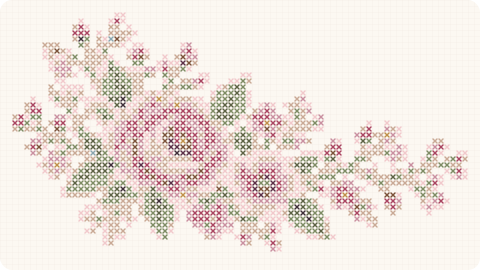
Satin and rayon-style embroidery floss produce a glossy surface that cotton cannot imitate, which makes them useful for silk-like fabric, water, jewelry, highlights and decorative lettering. The same smooth surface also makes them slippery. Strands separate, ends escape from the needle and stitches can loosen if the thread is handled exactly like ordinary cotton. A few changes in length and anchoring make the material much more predictable.
Work with shorter lengths to reduce tangles
Rayon fibers are smooth and springy, so a long length can form loops behind the fabric before you notice. Cutting shorter pieces reduces the amount of loose thread travelling through the air and through the Aida. It also limits abrasion, helping the shine stay consistent.
If your normal cotton length is comfortable, start with something noticeably shorter for satin floss and adjust from there. Fewer centimeters can save more time than they cost in extra starts.
Separate strands carefully and let them relax
Pull individual strands from the bundle rather than yanking several together. Then align them gently before threading. Because rayon can hold bends from the skein, letting the separated strands hang for a moment helps them straighten.
Do not stretch hard to force them flat. Excess tension can create uneven lengths within the bundle, so one strand later forms a loop while the others remain tight.
Keep a generous tail through the needle eye
Smooth rayon slips through the needle more easily than cotton. Leave a longer tail beyond the eye and check it regularly. A smooth, adequately sized tapestry needle helps prevent the fibers from snagging while still giving you control.
If one strand repeatedly escapes from a multi-strand bundle, trim the ends level and rethread them together rather than continuing with mismatched tail lengths.
Use secure starts and finishes
Because the surface is slippery, a very short buried tail may work loose more readily than cotton. Run starts and finishes under several established stitches or use a suitable pin stitch where it can be hidden. Test loop starts carefully if the material slides against itself.
Avoid bulky permanent knots. They can create hard lumps and still may not be as secure as a properly woven tail. The goal is more friction across several stitches, not one tight knot.
Let the shine stay visible by controlling twist
The reflective surface looks best when strands lie reasonably parallel. If they twist into a cord, light hits the bundle unevenly and the stitch can look narrower. Let the needle hang often and consider railroading on prominent top legs.
Use moderate tension. Pulling rayon very tight can make it sink into the fabric and reduce the broad reflective surface you chose it for in the first place.
Mix satin floss with cotton strategically
You do not need to replace every color in a design. A few shiny accents often create more contrast than an entire glossy project. Use satin for specific highlights and cotton for large structural areas if you want easier stitching and stronger visual hierarchy.
Before washing or ironing, check the care guidance for the exact fiber. Rayon and specialty satin products can react differently to heat and moisture. With shorter lengths, secure woven tails and frequent untwisting, the thread becomes much less frustrating and the smooth sheen remains intact.
If the thread develops stubborn kinks, lightly dampening is not automatically safe for every rayon product. Check the manufacturer’s instructions instead of using tricks intended for cotton. Some stitchers find that letting the strand hang under its own weight is enough to relax it without introducing moisture.
Needle entry also affects the glossy surface. Try not to split existing satin strands when several stitches share one hole. Slide the needle beside the previous fiber. Repeated piercing can roughen the shiny surface and make one corner look fuzzy while the rest remains smooth.
For large satin areas, alternate fresh lengths before the old strand becomes visibly worn. A new piece can look brighter than an overused one, so changing slightly earlier keeps sheen more consistent across a block.
Satin floss can also reveal differences in stitch direction more strongly than matte cotton because every top leg reflects light. Keep the final diagonal consistent across the area. A reversed stitch may look like a darker patch even when the color is identical.
When the project contains fractional stitches, check how the shiny fiber behaves in the shared holes before committing. A crowded quarter or three-quarter stitch can abrade rayon quickly. Shorter lengths and a slightly finer needle may make detailed areas easier without sacrificing the gloss.