
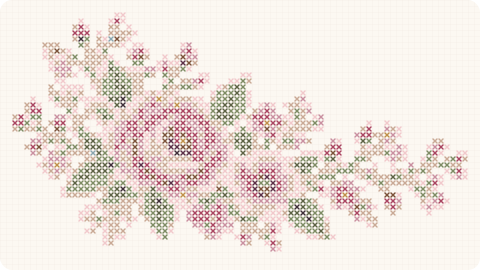
Buying a cross stitch pattern online should be simple: you see a design you genuinely want to stitch, understand the commitment involved and know exactly what you will receive when you download it. Problems begin when a product page relies almost entirely on an attractive image and leaves out the information you actually need to begin.
So rather than asking only which platform to use, it is more useful to ask how well the pattern is presented. A well-organized designer shop can offer something a huge marketplace often cannot: consistency between products, comparable specifications and a clear sense of what kind of stitching experience each project provides.
Start with a collection that suits the way you like to stitch
If you are drawn to modern, pop, minimalist or limited-color designs, a collection built around that visual language is more useful than hundreds of unrelated search results.
A coherent collection also makes comparison easier. You can quickly see which patterns are small, which use heavier coverage, which share a palette and which could work together as a series.
That is the approach we want for our shop: not accumulating files for the sake of volume, but organizing designs so you can discover projects by subject, style, scale and level of commitment.
Buying directly from the brand should also have a practical advantage: access to the current PDF version, a clear point of reference if a correction is ever needed, and an easy way to discover related designs without starting a completely new search every time.
A marketplace can be useful for discovering brands, but once you know which aesthetic you enjoy, a designer’s own shop should offer a cleaner experience.
What the product page should tell you before you buy
At minimum, you need stitch dimensions, color count, suggested fabric, floss brand and the techniques used. If the design includes backstitch, fractional stitches, knots or additional materials, that should be visible before purchase.
Approximate finished measurements on 14-, 16- and 18-count Aida are useful as well. They do not replace stitch dimensions, but they help you picture the piece in a frame, hoop or wall arrangement.
The page should make it obvious that you are buying a digital file and explain which versions are included: for example a color chart, black-and-white symbols, key, instructions and multi-page layouts when required.
A small inside preview of the PDF builds more confidence than ten mockups. It does not need to reveal the complete chart; it only needs to show that the grid, symbols and key are genuinely designed for stitching.
With our products, that level of practical detail should be part of the listing rather than something you discover after paying.
How to decide whether the price makes sense
The price of a pattern is usually a very small part of the time you will invest in the project. If you will stitch for ten, twenty or fifty hours, saving a tiny amount on the file matters less when the PDF is awkward or the design does not excite you.
We think three things matter more: originality of the design, technical quality of the file and whether you genuinely want to finish the piece.
A small, thoughtfully designed chart may offer more value than a gigantic fifty-color conversion. Equally, a complex project can justify its price when palette, layout and instructions remove friction over many weeks of stitching.
The point is not to pay more by default. It is to understand what you are buying and whether the file deserves the hours you plan to give it.
What we want you to find in our shop
Our goal is for the shop itself to answer “where should I buy a pattern?” without sending you away to continue searching. We want it to bring together original, modern designs with reviewed PDFs and consistent product information.
That means being honest about difficulty and scale. If a project has heavy coverage or frequent color changes, you should know before buying. If it is a quick weekend piece, that should be obvious too.
We also want collections to have continuity. If you enjoy one botanical, pop, pet or retro pattern, related designs should be easy to find within the same visual world.
And if we offer a free design, it should let you test that exact standard before spending anything: the same chart clarity, symbol logic and care, even if the project itself is smaller.
Buying cross stitch patterns online should not require twenty tabs just to find something acceptable. The best experience is finding a brand whose style you enjoy, understanding each project’s commitment and choosing by design, time and enthusiasm. That is the kind of shop we are building.